How to Size a Dining Table for Your Space — The Complete Guide
Most people size their dining table by the room. That's the wrong starting point — and it's one of the most common mistakes we see when Wisconsin families come to us after buying the wrong table somewhere else.
The right approach is to size by people first, then work backward to confirm the room can handle it.
Here's the complete guide we walk every client through before a single piece of wood gets cut.
Start With How Many People You Want to Seat
This sounds obvious but most people get it wrong because they think about how many people live in the house rather than how many they actually want to seat at one time.
Think about your reality. A family of four that hosts Thanksgiving for twelve needs a very different table than a family of four that rarely has guests. Design for how you actually live — not just the Tuesday night dinner.
The rule of thumb we use: allow 24 inches of table length per person. This gives everyone comfortable elbow room without feeling cramped.
- Seat 6 comfortably: 72 inches minimum
- Seat 8 comfortably: 96 inches minimum
- Seat 10 comfortably: 120 inches minimum
- Seat 12 comfortably: 144 inches minimum
If you want to seat 8 but occasionally need 10, consider whether an extension leaf makes sense for your situation.
Width Matters More Than Most People Think
Most dining tables fall between 36 and 42 inches wide. Here's how to think about it:
36 inches is the minimum for comfortable place settings on both sides with a centerpiece. It works but can feel tight.
42 inches is the sweet spot for most families. Enough room for place settings, serving dishes, and a centerpiece without anyone feeling cramped.
Anything over 48 inches and people start to feel disconnected from each other across the table. Great for a conference room, not ideal for a family dinner.
Room Clearance — the Number Most People Ignore
Once you have your table dimensions, you need to make sure your room can handle it. The rule is simple: 36 inches of clearance minimum between the edge of the table and the nearest wall or piece of furniture. This is the minimum for someone to push their chair back and stand up comfortably.
42–48 inches feels much better in practice and is what we recommend whenever the room allows it.
To calculate whether your room works: measure the room, subtract the table dimensions, and divide the remainder by two. That's your clearance on each side.
Example: 12-foot wide room (144 inches) minus a 42-inch wide table = 102 inches remaining. Divided by two = 51 inches of clearance on each side. Plenty of room.
Round vs Rectangular — Which Is Right for Your Space?
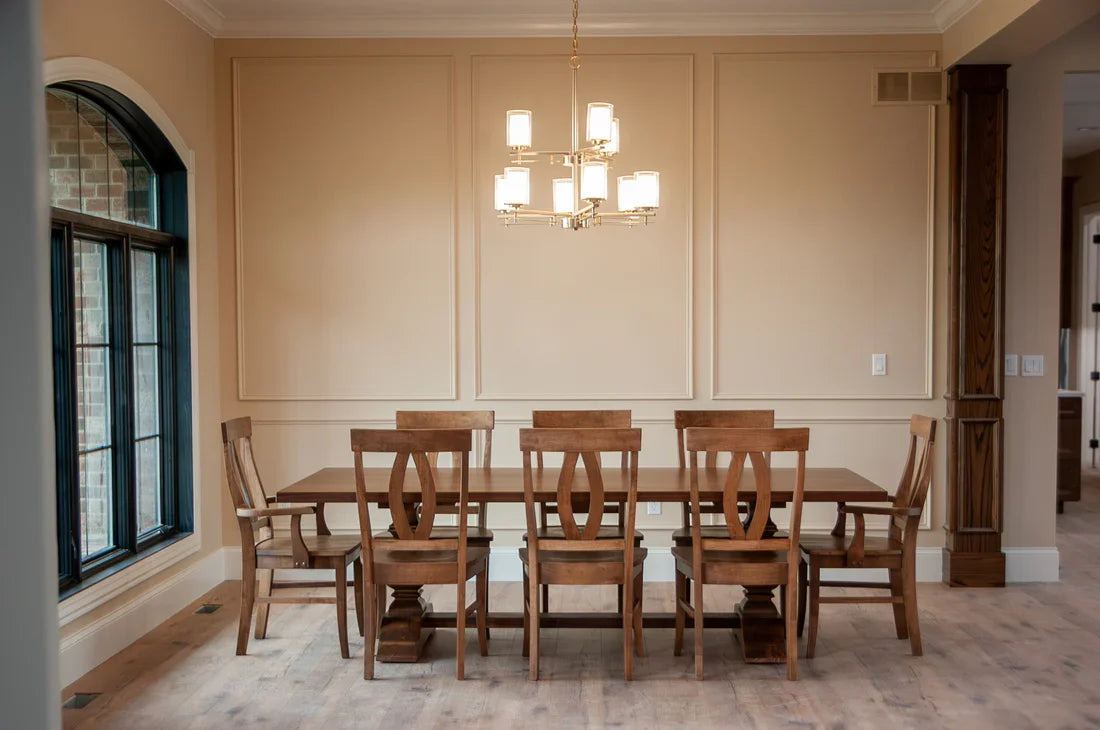
Rectangular tables seat more people efficiently and work best in longer, narrower rooms. They're the most common choice for a reason.
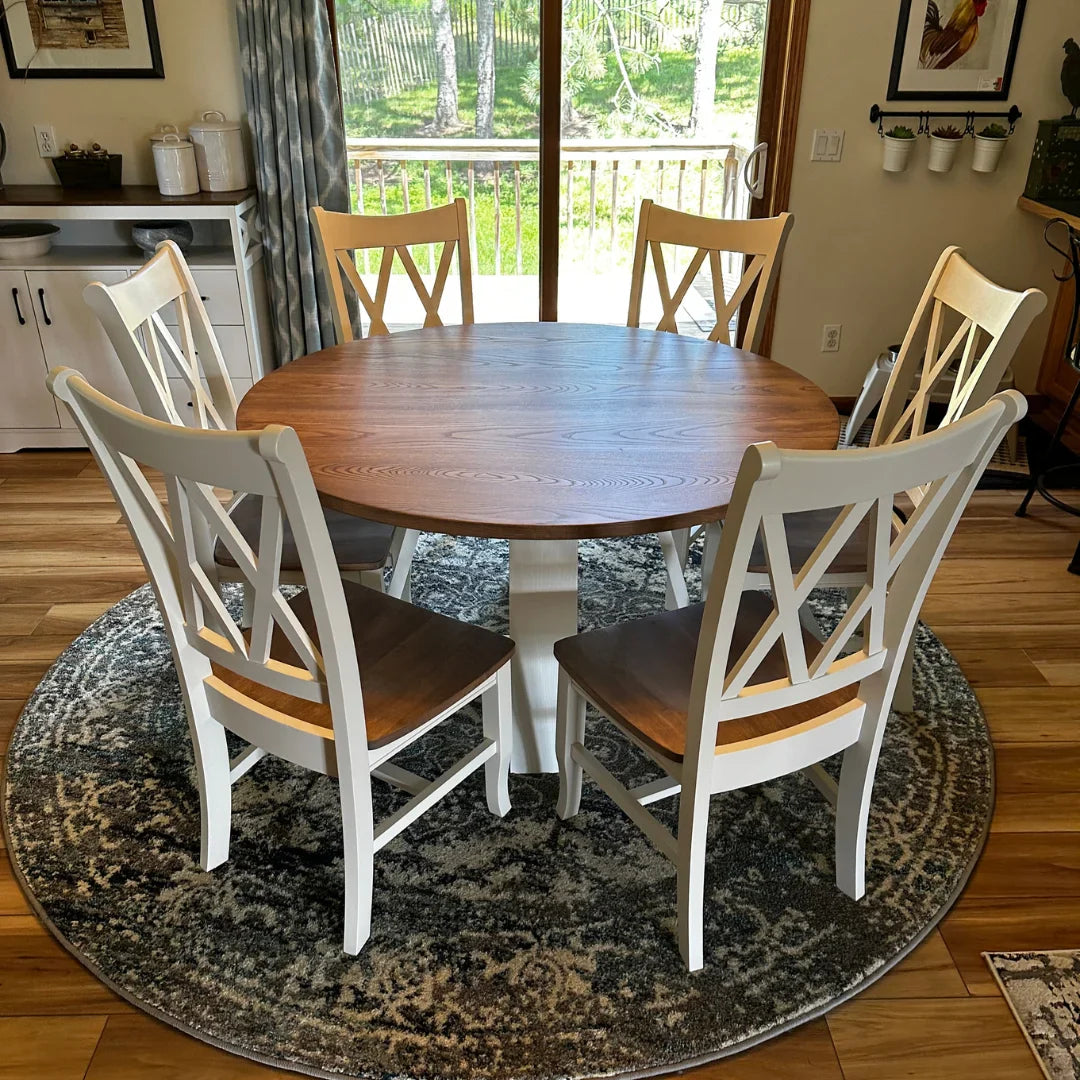
Round and oval tables work beautifully in square rooms and create a more intimate dining experience — everyone is equally close to everyone else. The tradeoff is they seat fewer people for the same footprint.
Pedestal bases — like our Circle Court tables — are especially good for round and oval tops because there are no legs in the corners to bump into. Great for smaller spaces.
The Mistake We See Most Often
Families order a table that fits the room on paper but seats two fewer people than they actually need. They measure for the everyday dinner and forget about Christmas, Easter, and the Sunday dinners when the whole family comes over.
Measure for how you live at your fullest — not your quietest.
How We Handle This at Rustic Roots
Every project starts with a conversation. We've helped hundreds of Wisconsin families get this right and we've never cut a piece of wood until the dimensions are confirmed and approved.
If you're unsure what size makes sense for your space — that's exactly what the free design consultation is for.